What Are DAOs?
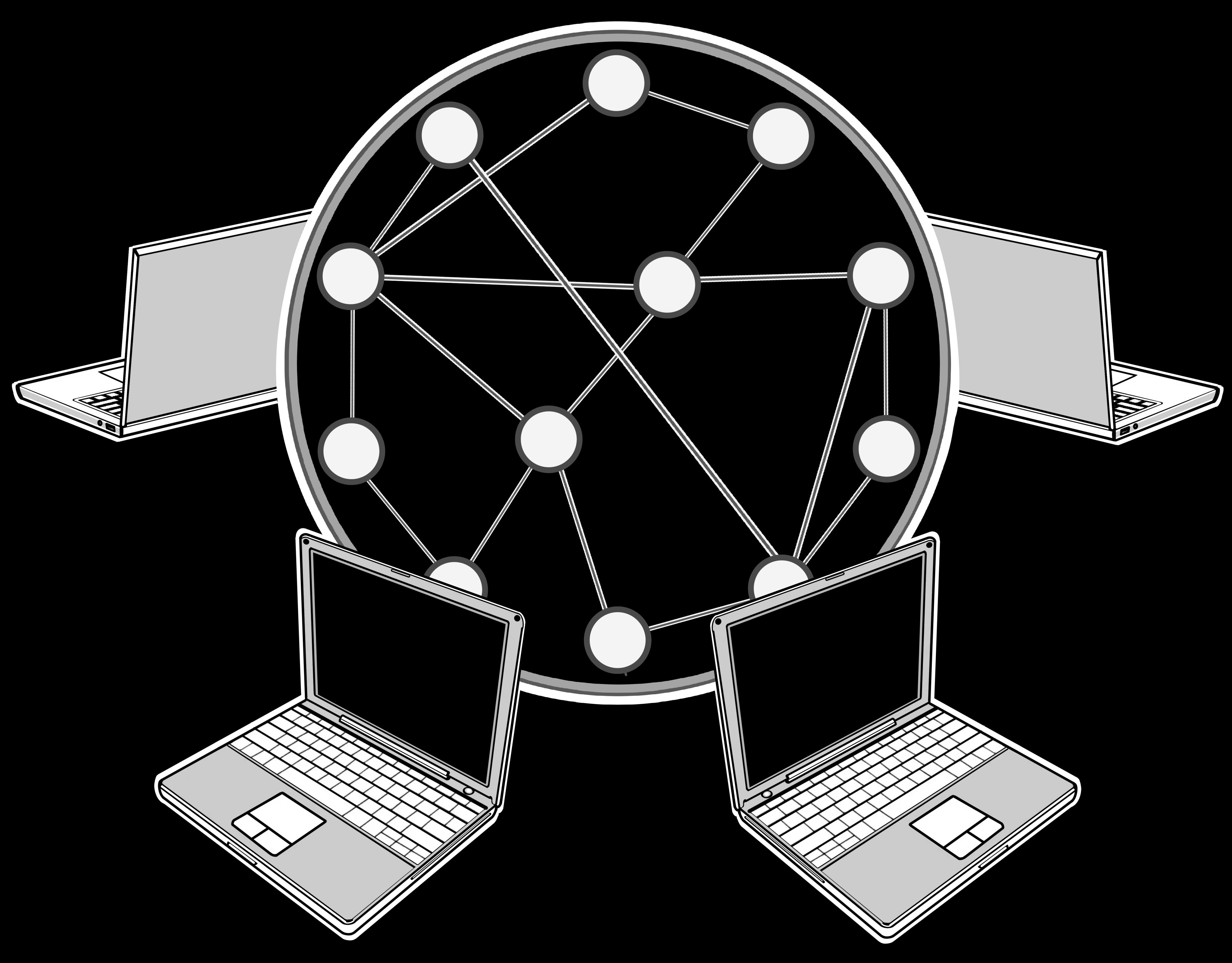
Decentralized Autonomous Organizations, commonly referred to as DAOs, are governance structures implemented through executable rules on a distributed network. Rather than relying on centralized management or legal hierarchies, DAOs coordinate decision making, resource allocation, and authority through transparent execution logic and collectively enforced rules.
At their core, DAOs replace discretionary control with verifiable execution. Decisions are expressed as transactions, validated by the network, and executed according to predefined governance rules. This allows organizations to operate without reliance on a central operator while maintaining a consistent and auditable record of actions.
DAOs are not a single technology or legal form. They are a method of organizing authority and coordination using deterministic execution and shared state.
Why DAOs Exist
DAOs emerged from the limitations of traditional organizational structures in digital and global contexts. Conventional organizations rely on jurisdiction bound legal systems, manual enforcement, and trusted intermediaries. These models do not scale cleanly across borders, nor do they provide strong guarantees of execution correctness or transparency.
DAOs were developed to address these issues by enabling organizations whose rules are enforced by execution rather than interpretation. Governance actions are carried out exactly as specified, subject to network consensus and execution constraints. This reduces ambiguity in enforcement and enables participation across jurisdictions without centralized gatekeepers.
For public infrastructure, open source coordination, digital asset governance, and protocol management, DAOs provide a framework for collective decision making that is verifiable and repeatable.
How DAOs Work
A DAO operates by encoding governance logic into executable programs that manage shared state. Participants interact with the DAO by submitting transactions that propose actions, cast votes, or trigger execution paths. The network validates these interactions and updates state according to deterministic rules.
The security and integrity of a DAO depend directly on the execution environment in which it operates. The cryptographic assumptions used for identity, authorization, and execution ordering define the effective trust model of the organization. If those assumptions degrade, governance authority becomes contestable.
In most existing blockchain environments, DAO execution relies on classical cryptography enforced outside the execution engine. Governance logic assumes that transactions have been authorized securely before execution begins. This assumption limits the long term reliability of DAO governance.
Quantova and DAOs
Quantova was designed with governance as a primary use case rather than an afterthought. DAOs deployed on Quantova execute within the Quantova Virtual Machine QVM, where cryptographic enforcement is native to execution.
Any DAO launched on QVM inherits the platform’s post quantum execution policy by default. Identity validation, transaction authorization, and governance actions are verified using postquantum cryptographic primitives enforced directly by the virtual machine. These rules are not selectable by DAO developers and cannot be bypassed by application logic.
This differs materially from DAOs deployed on existing platforms, where cryptographic enforcement occurs at the protocol boundary and execution environments assume its correctness. On Quantova, governance actions are cryptographically validated as part of execution itself, ensuring uniform enforcement across all DAO operations.
DAO Governance on Quantova
Governance within a DAO on Quantova is executed under deterministic, execution level cryptographic rules. Voting, proposal submission, role assignment, and administrative actions are all subject to the same post quantum verification and execution constraints.
Because cryptographic policy is governed at the platform level, DAOs do not need to implement independent security models or manage cryptographic upgrades. As execution policy evolves through network governance, DAOs inherit those changes automatically without requiring contract redeployment or governance resets.
This model supports long lived organizations whose authority structures must remain stable and interpretable over time, even as cryptographic standards change.
DAO Law and Legal Considerations
The legal treatment of DAOs varies across jurisdictions. Some legal systems recognize DAOs as legal entities under specific frameworks, while others treat them as contractual arrangements among participants.
Quantova does not impose a legal classification on DAOs. Instead, it provides an execution environment where governance actions are deterministic, auditable, and cryptographically enforced. This supports legal analysis by ensuring that organizational actions can be reproduced, inspected, and verified independently of discretionary interpretation.
For regulators and institutions, this provides a clearer foundation for evaluating accountability, compliance, and operational integrity, even when participants are distributed across jurisdictions.
DAO Membership and Identity
DAO membership on Quantova is defined through execution enforced identity and authorization rather than informal conventions. Membership rules are encoded into governance logic and enforced by QVM under post quantum cryptographic policy.
This allows DAOs to define roles, permissions, and participation thresholds without relying on external identity systems or application level cryptographic assumptions. Membership changes, voting rights, and authority delegation are recorded as deterministic state transitions.
Because identity verification is part of execution, DAO membership remains coherent and auditable over time, reducing ambiguity around authority and participation.
Summary
DAOs represent an evolution in how organizations coordinate authority and decision making. Their reliability depends on the execution environment that enforces their rules.
Quantova provides a purpose built execution layer for DAOs, where cryptographic enforcement, determinism, and governance are inseparable. DAOs deployed on QVM inherit post quantum execution semantics by default, avoiding the fragmented security models present in existing blockchain environments.
This design enables decentralized organizations that can operate across jurisdictions, adapt to evolving threat models, and maintain execution integrity over long operational horizons.
Regulatory Considerations for DAOs on Quantova
DAOs deployed on Quantova operate within a deterministic execution environment where governance actions are enforced by protocol defined cryptographic and execution rules. This design has direct relevance for regulatory review, auditability, and institutional assessment.
All DAO actions on Quantova are expressed as transactions executed within the Quantova Virtual Machine. Authorization, identity validation, voting, and administrative changes are verified using post quantum cryptographic primitives enforced at execution. This provides a uniform and inspectable record of governance activity that does not rely on discretionary enforcement by operators or application logic.
From a regulatory perspective, this execution model supports clear attribution of actions to cryptographic identities, reproducible governance outcomes, and consistent enforcement of organizational rules. Decisions taken by a DAO can be independently re executed and verified by any observer with access to the public state, without reliance on trust in intermediaries or off chain attestations.
Quantova does not assert legal classification for DAOs. Instead, it provides a technical substrate where governance actions are deterministic, auditable, and cryptographically validated. This separation allows regulators and courts to analyze DAO behavior using existing legal frameworks, while relying on a stable execution record rather than informal interpretations of intent.
Because cryptographic policy is governed at the network level, DAOs on Quantova do not exhibit fragmented security postures across contracts or participants. This reduces ambiguity during compliance review, as governance authority is exercised under a single execution policy rather than a collection of application defined assumptions.
Quantova’s governance controlled cryptographic evolution further supports regulatory review. As cryptographic standards change, enforcement is updated through on chain governance without altering historical records or selectively modifying organizational behavior. Past actions remain verifiable under the execution rules active at the time they occurred.
Developer Guide Deploying DAOs on QVM
Developers deploying DAOs on Quantova work within a constrained execution environment where cryptographic enforcement and determinism are properties of the virtual machine rather than the application.
DAO logic on QVM focuses on governance rules, state transitions, and role management. Developers do not implement or select cryptographic primitives for identity, signatures, or authorization. These functions are provided through QVM’s post quantum remote procedure primitives and enforced uniformly at execution.
A DAO contract defines how proposals are created, how participation is measured, how votes are evaluated, and how outcomes are applied to state. When a governance action is submitted, the transaction invoking that action is authorized and validated using post quantum cryptography before execution proceeds. Execution halts if cryptographic verification fails.
Because execution cost and verification are deterministic, developers can reason about DAO behavior without accounting for variable cryptographic timing, signature cost variance, or network dependent ordering. For a given state and transaction set, the resulting governance outcome is reproducible across all nodes.
DAO upgrades and governance changes do not require redeploying cryptographic logic. As the network updates its execution policy through governance, DAO contracts automatically operate under the updated cryptographic rules, provided they conform to execution semantics. This allows developers to design governance systems intended to operate over extended timeframes without embedding assumptions about specific cryptographic algorithms.
Testing and auditing DAO contracts on Quantova focus on governance correctness and execution logic rather than cryptographic soundness. Cryptographic enforcement is uniform and external to application code, reducing the surface area for implementation errors and simplifying review.
Alignment Between Governance, Execution, and Compliance
DAOs on Quantova occupy a distinct position compared to existing blockchain governance systems. Governance authority, execution correctness, and cryptographic validation are not layered independently. They are enforced as a single execution process.
For regulators, this provides a clearer boundary between organizational rules and technical enforcement. For developers, it reduces complexity and limits avoidable security failures. For institutions, it supports governance systems whose behavior can be evaluated, reproduced, and audited over time.
Quantova’s DAO model does not attempt to replace legal systems or organizational accountability. It provides a deterministic execution environment where governance actions are carried out exactly as specified under a transparent and evolving cryptographic policy.
This alignment is central to Quantova’s design and reflects its focus on infrastructure level governance rather than application level experimentation.
DAO Compliance Checklist for Institutions
This checklist is intended to support institutional review of decentralized organizations deployed on Quantova. It focuses on execution integrity, governance clarity, and auditability rather than legal classification.
Governance Definition
The DAO’s governance rules are explicitly defined in executable logic and enforced through QVM execution. Proposal creation, voting mechanisms, quorum thresholds, and execution conditions are unambiguous and reproducible from on chain state.
Identity and Authorization
All governance actions are authorized through post quantum cryptographic identities enforced by QVM. No administrative actions rely on off chain approval, discretionary operator control, or legacy cryptographic assumptions.
Deterministic Execution
Governance outcomes are deterministic. Given the same global state, transaction ordering, and execution policy, all nodes derive the same results. There are no timing dependent or environment dependent governance paths.
Cryptographic Policy Enforcement
The DAO does not define or select its own cryptographic primitives. Signature verification, hashing, and authorization are enforced by QVM under the active post quantum execution policy. This prevents selective weakening of security assumptions.
Upgrade and Change Management
Protocol or cryptographic changes affecting DAO execution are applied through network governance rather than contract redeployment. Historical governance actions remain verifiable under the execution policy active at the time they occurred.
Auditability and Record Integrity
All governance actions, votes, and state changes are recorded on chain and can be independently re executed and verified. There are no hidden execution paths, administrative overrides, or privileged accounts outside defined governance rules.
Jurisdictional Neutrality
The DAO operates as protocol executed logic without reliance on a specific jurisdiction, operator, or hosting entity. Legal interpretation remains external to the protocol, supported by a consistent and inspectable execution record.
Operational Continuity
The DAO does not depend on a single maintainer, signer, or operator for continued function. Governance execution remains valid as long as the network operates under QVM execution rules.
QVM DAO Reference Implementation Walkthrough
This section describes how a typical DAO is implemented and operates within the Quantova Virtual Machine. It is intended for developers designing governance systems aligned with QVM execution semantics.
DAO Initialization
A DAO is deployed as a QVM contract defining governance state variables such as membership representation, proposal structure, voting rules, and execution permissions. No cryptographic parameters are included in the contract.
Upon deployment, the contract inherits QVM’s execution environment, including post quantum authorization, deterministic execution ordering, and domain separated cryptographic contexts.
Membership Representation
DAO membership is represented through QVM recognized identities. These identities are validated using post quantum signatures at execution. Membership logic may reference balances, roles, or attestations, but identity verification itself is handled by the VM.
Proposal Lifecycle
A proposal is created through a transaction invoking the DAO contract. The transaction is authorized using QVM enforced post quantum signatures. If verification fails, execution does not proceed.
Once accepted, the proposal enters a defined voting state. Voting transactions are similarly authorized and executed deterministically. Vote counting is based on contract defined rules, executed uniformly across all nodes.
Voting and Evaluation
Voting logic is executed as part of the contract’s state transition. Because execution order and cost are deterministic, vote evaluation produces the same result across the network, independent of node performance or verification timing.
No external randomness or discretionary evaluation is permitted unless explicitly defined using QVM supported deterministic mechanisms.
Proposal Execution
If a proposal meets its defined conditions, execution occurs automatically within the same execution environment. State changes resulting from governance decisions are subject to the same cryptographic and execution constraints as all other transactions.
There is no privileged execution path for governance actions. Administrative authority is exercised entirely through contract logic and QVM enforcement.
Cryptographic Evolution
If the network updates its post quantum execution policy through governance, DAO contracts continue to operate under the updated rules without modification. Developers do not redeploy contracts to adopt new cryptographic standards.
This ensures that governance systems remain functional as cryptographic assumptions evolve, without fragmenting execution behavior across versions.
Auditing and Verification
Auditors can reconstruct the full governance history by replaying transactions through QVM with the corresponding execution policy. Governance outcomes, authorization validity, and state changes are all derived from deterministic execution rather than interpretation.
Appendix A DAO Legal Mapping, Execution Records and Legal Analysis
Decentralized organizations deployed on Quantova produce execution records that are deterministic, reproducible, and cryptographically bound to network consensus. These properties support legal and regulatory analysis without requiring reinterpretation of protocol behavior.
Each governance action, including proposal creation, voting, and execution, is expressed as a transaction executed within QVM. Authorization, ordering, and state transition are enforced by the execution environment rather than by discretionary actors. As a result, the record of governance activity reflects what occurred, how it occurred, and under which execution rules, without reliance on off chain attestations.
From a legal perspective, this enables several mappings. Authority can be inferred from execution rights rather than informal control. Intent is represented through explicit transactions signed by post quantum identities. Outcomes are derived from deterministic execution rather than subjective interpretation. Historical actions remain verifiable even as cryptographic standards evolve, because execution policy is part of the recorded state context.
Importantly, Quantova does not assign legal status to DAOs. It provides an execution substrate whose records can be evaluated under existing legal frameworks. Regulators and courts may interpret these records as they would any other technical system log, with the additional benefit that execution can be independently replayed and verified.
This separation preserves jurisdictional neutrality while improving evidentiary clarity. The protocol defines how execution occurs, legal systems determine how that execution is classified.
Appendix B Reference DAO Contract Model on QVM
DAO contracts on Quantova are defined as executable governance logic operating under QVM enforced cryptographic and execution rules. The contract does not select cryptographic primitives, define signature schemes, or manage verification parameters. These are inherited from the execution environment.
A typical DAO contract defines state related to proposals, voting windows, participation thresholds, and execution permissions. Membership may be represented through balances, attestations, or roles, but identity verification is handled by QVM during transaction execution.
Proposal submission is a transaction invoking the contract. The transaction is authorized through post quantum signatures validated by QVM. If authorization fails, the transaction does not enter execution. Voting follows the same pattern, with each vote represented as an authorized state transition.
Proposal evaluation and execution occur deterministically based on contract defined rules. There are no privileged execution paths for governance actions. All outcomes are subject to the same execution constraints as any other transaction on the network.
Below is a conceptual outline illustrating the structure, not an implementation specification,
state DAO {
 proposals
 voting_rules
 execution_permissions
}
on submit_proposal(tx) {
 require(QVM.authorized(tx))
 record proposal
}
on vote(tx, proposal_id) {
 require(QVM.authorized(tx))
 record vote
}
on execute(proposal_id) {
 require(voting_conditions_met)
 apply state changes
}
This model ensures that governance logic is explicit, auditable, and uniformly enforced. Changes to cryptographic standards or execution policy occur at the network level and apply consistently to all DAO contracts.
Appendix C, Comparative DAO Execution Model QVM and EVM Based Systems
DAO systems deployed on existing smart contract platforms inherit the execution and cryptographic assumptions of those environments. In EVM based systems, transaction authorization relies on elliptic curve signatures validated before execution. Smart contracts assume that authorization and identity checks are correct and do not participate in enforcing cryptographic policy.
As a result, DAO security in those systems is bounded by protocol level assumptions that contracts cannot alter. Even if a DAO implements additional verification internally, execution only occurs after classical cryptographic validation has already succeeded. Governance logic therefore operates downstream of fixed assumptions.
Execution cost models in EVM based systems are calibrated around classical cryptographic operations. Introducing alternative primitives affects gas accounting, transaction ordering, and determinism, limiting the ability to evolve cryptography without protocol disruption.
In contrast, DAOs on Quantova execute within QVM, where cryptographic verification is part of execution semantics. Authorization, identity validation, and execution ordering are enforced by the virtual machine under a post quantum execution policy. Contracts cannot bypass these rules, nor can they weaken them.
This difference has practical consequences. On QVM, all DAOs operate under a uniform cryptographic and execution model. Governance outcomes are derived from deterministic execution that includes cryptographic validation as part of state transition. On EVM based systems, governance logic is layered on top of assumptions it cannot control.
The distinction is not about expressiveness of contract logic. It is about where cryptographic authority resides. In QVM, cryptography is enforced by execution. In EVM based systems, cryptography is assumed before execution begins.
Appendix D Formal Terminology Glossary Regulatory and Legal Context
Quantova
An open, public distributed execution network that defines state transitions through a deterministic virtual machine governed by post quantum cryptographic policy. Quantova specifies how execution occurs but does not assign legal status to applications or participants.
QVM Quantova Virtual Machine
The execution environment responsible for validating transactions, enforcing cryptographic policy, ordering execution, and producing state transitions. QVM treats cryptographic verification as part of execution rather than a prerequisite external to it.
Post Quantum Execution Policy Πₚqᵣ
A protocol defined set of cryptographic and execution rules enforced uniformly by QVM. This policy governs signature verification, hashing, domain separation, execution ordering, and validation semantics.
Post Quantum Remote Procedure Calls PQR
Network interfaces through which clients interact with QVM. PQR methods reflect execution semantics, including cryptographic verification, rather than abstracting them away at the client layer.
Deterministic Execution
A property whereby identical inputs to the execution environment produce identical execution traces and state outcomes across all validating nodes. Determinism is required for consensus integrity and auditability.
DAO Decentralized Autonomous Organization
A programmable governance structure whose rules are expressed as executable logic and enforced by the underlying execution environment. On Quantova, DAO behavior is subject to QVM execution constraints and cryptographic policy.
Execution Record
The cryptographically verifiable trace of transactions, state transitions, and execution outcomes produced by QVM. Execution records are replayable and independently verifiable.
Governance Action
Any transaction that alters governance related state, including proposal submission, voting, parameter changes, or execution of approved decisions.
Protocol Governance
The process by which changes to execution rules, cryptographic parameters, or virtual machine behavior are proposed, evaluated, and adopted through on chain mechanisms.
Identity Protocol Sense
A cryptographic construct used to authorize execution within the network. Identity validation is enforced by QVM and does not imply legal personhood.
Appendix E Jurisdiction Neutral Governance Risk Matrix
In distributed governance systems, risks arise from the interaction between execution rules, participant behavior, and external legal interpretation. Quantova addresses these risks through execution design rather than discretionary controls.
Authorization Risk arises when governance actions can be executed without consistent identity validation. In Quantova, authorization is enforced at execution using post quantum signatures validated by QVM. Transactions that fail validation do not execute.
Execution Ambiguity Risk occurs when different nodes may interpret or execute governance logic differently. QVM enforces deterministic execution and instruction ordering, eliminating divergence caused by timing, cost variance, or local verification behavior.
Cryptographic Obsolescence Risk reflects the degradation of security assumptions over time. Quantova separates cryptographic policy from application logic, allowing governed updates to execution policy without invalidating historical state.
Selective Enforcement Risk emerges when governance rules apply inconsistently across applications or execution paths. QVM applies the same execution and cryptographic rules to all transactions, including governance actions, without exceptions.
Governance Capture Risk refers to concentration of control over execution rules or upgrades. Quantova protocol governance distributes authority across token holders and validators, with execution enforcing outcomes rather than discretionary actors.
Auditability Risk arises when governance outcomes cannot be independently reconstructed. QVM execution records allow third parties to replay governance actions and verify outcomes using public data.
This matrix does not eliminate legal or political risk. It defines how execution behavior limits technical ambiguity, enabling regulators and institutions to assess governance outcomes using reproducible records rather than informal assurances.
Appendix F, QVM DAO Lifecycle
A DAO deployed on Quantova progresses through a series of execution governed phases. Each phase produces records that can be independently verified and reviewed.
Initialization Phase
The DAO’s governance logic is deployed as executable code within QVM. The deployment transaction is authorized using post quantum identity and recorded as a state transition. The initial governance parameters become part of global state.
Participation Phase
Participants interact with the DAO by submitting transactions that invoke governance functions. Each interaction is authorized, ordered, and executed under QVM rules. Identity validation and execution context are enforced uniformly.
Deliberation Phase
Proposals and votes are recorded as state changes. The execution environment does not interpret intent, it enforces rules exactly as defined by the contract and execution policy. All actions are time ordered and reproducible.
Decision Phase
When execution conditions defined by the DAO logic are met, outcomes are applied deterministically. No off chain intervention or discretionary approval is required for execution to occur.
Enforcement Phase
Approved actions modify state according to execution results. These changes are final unless reversed through subsequent governance actions executed under the same rules.
Historical Review Phase
At any point, third parties may reconstruct the DAO’s governance history by replaying execution from recorded state and transactions. This supports audit, compliance review, and legal analysis without reliance on privileged access.
This lifecycle does not define legal responsibility or regulatory classification. It defines how actions occur within the system. Legal systems may map these actions to existing frameworks as appropriate.
Regulatory FAQ Common Supervisory Questions
Quantova is a public execution network that processes transactions and state transitions through a deterministic virtual machine. It provides execution infrastructure. It does not issue financial instruments, manage user funds, or operate accounts.
No. Applications and DAOs are deployed by third parties. Quantova defines execution rules and cryptographic enforcement but does not determine application purpose, governance outcomes, or user behavior.
Transactions are authorized cryptographically by the submitting party using post quantum signature schemes enforced by QVM. Authorization is technical and does not imply legal identity verification unless implemented by an application.
Executed state transitions are immutable within the protocol. Subsequent actions may modify state only through new transactions executed under the same rules.
All execution is publicly verifiable. State transitions, governance actions, and execution order can be independently replayed from network data using QVM rules.
Quantova enforces deterministic execution and cryptographic validation. Compliance logic, reporting requirements, or disclosure obligations must be implemented by applications or governance structures built on the network.
Quantova enforces post quantum cryptographic primitives at execution. Cryptographic parameters are governed at the protocol level and may evolve through formal governance processes.
Cross Border Compliance Interpretation Note
Quantova operates as a globally accessible execution protocol without geographic restrictions embedded at the protocol layer. Nodes, developers, and users may be located in different jurisdictions simultaneously.
From a compliance perspective, Quantova should be understood as infrastructure rather than an operator. Jurisdictional obligations attach to entities that deploy applications, provide services, operate custodial functions, or exercise governance authority, not to the execution protocol itself.
Because execution is deterministic and publicly verifiable, Quantova supports cross border regulatory analysis by enabling consistent reconstruction of events regardless of observer location. Execution records are neutral artifacts that may be evaluated under local legal frameworks without requiring protocol modification.
Quantova does not route transactions, select participants, or enforce jurisdictional access controls by default. Applications requiring geographic restrictions, licensing compliance, or jurisdiction specific controls must implement those requirements at the application or governance level.
The protocol’s design allows regulators in different jurisdictions to independently assess identical execution data, reducing discrepancies caused by off chain intermediaries or discretionary enforcement.
Technical Legal Boundary Statement
Protocol Responsibility vs Operator Responsibility
Quantova defines a clear separation between protocol behavior and participant responsibility.
The protocol is responsible for,
- Deterministic execution of transactions
- Enforcement of cryptographic verification at execution
- Ordering of execution and state transitions
- Preservation of historical execution records
- Governance driven evolution of execution rules
The protocol is not responsible for,
- The purpose or legality of applications deployed
- The economic activity conducted through applications
- Compliance obligations of service providers
- Identity verification beyond cryptographic authorization
- Off chain agreements or representations
Node operators are responsible for,
- Operating infrastructure in compliance with local law
- Following protocol rules when validating execution
- Managing their own operational and regulatory obligations
Application developers and DAO participants are responsible for,
- Defining governance logic and application behavior
- Ensuring compliance with applicable regulations
- Managing disclosures, permissions, and controls
- Interfacing with users and external systems
This boundary ensures that Quantova functions as neutral execution infrastructure. Legal accountability arises from use, operation, and governance conducted on top of the protocol, not from the protocol’s existence or execution rules themselves.
What Quantova Is Not
Quantova is not a financial institution, custodian, or intermediary. It does not hold assets, manage accounts, execute trades, or provide settlement services. The protocol does not take custody of user funds, issue instruments, or intermediate transactions between parties.
Quantova is not a service provider acting on behalf of users. It does not exercise discretion over transactions, governance outcomes, or application behavior. All actions executed on the network are initiated by participants and processed according to deterministic execution rules.
Quantova is not an identity provider. Cryptographic authorization is used to validate execution, but legal identity, customer due diligence, and compliance verification are outside the scope of the protocol unless implemented explicitly by applications or governance frameworks built on top of it.
Quantova is not a controller of applications, DAOs, or smart contracts deployed on the network. It does not approve deployments, select governance participants, or direct how protocols are used. Responsibility for application behavior rests with the entities that design, deploy, and operate them.
Quantova is not a discretionary system. It does not apply subjective judgment, policy decisions, or selective enforcement. Execution follows predefined rules that are applied uniformly across all participants.
Enforcement Cooperation and Data Accessibility
Quantova’s execution model is fully transparent and publicly verifiable. All state transitions, governance actions, and execution traces are recorded in a form that can be independently reconstructed by third parties without reliance on privileged access.
From an enforcement perspective, this provides a consistent and auditable record of activity. Regulators, auditors, and investigators may analyze execution data using standard tooling to reconstruct transaction history, governance decisions, and state evolution.
Quantova does not restrict access to execution data, nor does it require authorization to observe network activity. There are no private ledgers, discretionary logs, or operator controlled records. The same data available to participants is available to external observers.
The protocol itself does not possess information beyond cryptographic transaction data and execution results. Personal data, off chain agreements, and identity records are not maintained by the protocol unless explicitly stored by applications.
Quantova does not impede lawful enforcement actions. Obligations related to information provision, reporting, or cooperation apply to application operators, service providers, and identifiable entities interacting with users, not to the execution protocol.
Comparative Appendix, Mapping Quantova to Legal Technology Categories
From a legal and regulatory standpoint, Quantova most closely aligns with neutral execution infrastructure rather than financial or service layer systems.
Quantova can be compared to,
- A distributed execution engine, analogous to a publicly verifiable compute layer
- A protocol level ruleset that enforces execution correctness
- A shared infrastructure layer similar in role to internet routing or consensus based databases
Quantova should not be classified as,
- A payment processor
- A financial market operator
- A custodian or trustee
- A managed service provider
- A corporate governance body
Unlike traditional platforms, Quantova does not operate accounts, onboard users, or impose terms of service governing use. Participation is defined by protocol rules rather than contractual relationships.
Unlike application layer systems, Quantova does not define business logic, economic models, or governance outcomes. It enforces execution constraints uniformly, while allowing higher level systems to define their own legal and operational frameworks.
This distinction is central to regulatory interpretation. Legal responsibility arises at the layer where discretion, control, and user interaction occur. Quantova occupies the execution layer, where behavior is constrained by deterministic rules rather than operational decision making.
Supervisory Classification Summary
From a supervisory perspective, Quantova is best classified as neutral execution infrastructure rather than a financial, custodial, or service providing system. Its primary function is to define and enforce deterministic execution rules under a post quantum cryptographic policy. It does not intermediate transactions, exercise discretion, or manage user relationships.
Quantova operates at the protocol layer. It validates execution correctness, cryptographic authorization, and state transitions according to predefined rules that are applied uniformly across the network. These rules are enforced mechanically by the Quantova Virtual Machine and are not subject to operator judgment or discretionary control.
There is no centralized operator, administrator, or managing entity that controls network behavior. Governance of protocol parameters, including cryptographic policy, occurs through on chain mechanisms involving distributed participants rather than executive authority.
Applications, DAOs, and services built on Quantova represent distinct layers for supervisory analysis. Legal obligations, compliance duties, and regulatory exposure arise at those layers where identifiable entities design systems, interact with users, define economic activity, or exercise decision making authority.
As a result, Quantova should be evaluated similarly to other neutral technical infrastructure, as a rules based execution environment that enables activity but does not direct, manage, or benefit from it.
Risk Attribution Model, Where Liability Attaches
Quantova’s architecture supports clear separation of responsibility by design. Risk and liability attach at the layer where control, discretion, and user facing decisions occur.
At the protocol layer, Quantova enforces execution rules deterministically. It does not select participants, alter outcomes, or intervene in activity. The protocol itself does not originate transactions, initiate governance actions, or define application behavior. This layer is responsible only for correct and consistent execution of defined rules.
At the DAO layer, liability may arise where governance participants define rules, allocate resources, manage treasuries, or make collective decisions that have legal or economic consequences. DAOs deployed on QVM inherit the execution and cryptographic enforcement of the protocol, but governance outcomes are determined by DAO defined processes.
At the service and application layer, responsibility is most clearly established. Entities that deploy applications, provide user interfaces, custody assets, offer financial products, or perform compliance functions are the primary subjects of regulatory oversight. These actors define how the system is used and how users interact with it.
This layered model allows supervisors to attribute risk without conflating infrastructure with activity. Execution correctness remains a protocol concern, while legal accountability remains aligned with control and agency.
Compliance Responsibilities by Layer
Protocol Layer Quantova Network and QVM
Responsibilities at this layer are technical and structural. The protocol enforces deterministic execution, post quantum cryptographic validation, and uniform state transition rules. It provides transparent, verifiable execution records. It does not perform customer due diligence, transaction monitoring, sanctions screening, or reporting. The protocol does not hold assets, issue instruments, or interact with users.
DAO Layer On Chain Governance Systems
DAOs define governance processes, voting mechanisms, treasury management rules, and decision making authority. Compliance considerations at this layer may include governance transparency, accountability of decision makers, disclosure obligations, and adherence to applicable organizational or collective action frameworks. DAOs inherit cryptographic enforcement from QVM but remain responsible for the consequences of governance outcomes.
Service and Application Layer Wallets, Interfaces, Financial Products
This layer carries the majority of regulatory obligations. Responsibilities may include identity verification, consumer protection, financial reporting, licensing, record keeping, and cooperation with authorities. These entities choose how to present, restrict, or enable access to Quantova based systems and therefore exercise meaningful control.
This separation allows regulators to assess compliance without attributing service layer obligations to protocol infrastructure. It also enables institutions to build compliant systems on Quantova while relying on a stable and auditable execution foundation.