The post quantum toolbox for governments and finance
Quantum secure SDKs and tooling, cross chain bridges, and real world asset issuance. Built on NIST approved algorithms and running on the Quantova Virtual Machine.
Post quantum security enforced by the protocol
Quantova is a public, open source blockchain network and execution platform built for deterministic and secure execution. Post quantum resistant cryptography is enforced as a protocol level property, so system operations and smart contracts follow the same security rules from the core network through to deployed applications.
It is accessible to developers, institutions and public sector organisations, and is maintained by a distributed body of engineers and research contributors within a transparent, protocol defined framework.
Execution model. Quantova is a sovereign execution platform where post quantum resistant security is enforced by design, not left to application choice.
| Property | Detail |
|---|---|
| Network | Public, open source Layer 1 |
| Security | Post quantum, NIST approved |
| Execution | Quantova Virtual Machine |
| Native asset | QTOV |
| Finality | Deterministic, about 3 seconds |
| Owner | Quantova Inc |
Quantum secure tooling for institutions
A complete set of post quantum components, from cryptography to bridges to the wallet, ready for governments, banks and developers to adopt.
Post Quantum Cryptography
Signatures, hashing and verification enforced inside the Quantova Virtual Machine, from the core protocol through to deployed contracts.
Cross Chain Bridging
Trust minimised settlement across 36 blockchains and 78 assets, all issued and held on the Quantova Virtual Machine without custodians.
SDKs and APIs
Quantum secure client libraries that banks and finance firms integrate directly into their systems, with a dedicated research team building more.
Nominated Proof of Stake
Validators are nominated by participants, giving distributed control and fault tolerance with penalties that keep the set honest.
On Chain Governance
Forkless protocol upgrades through on chain referenda, with authority distributed across participants and a fully auditable record.
Native quantum secure wallet
QMask is the native Quantova wallet. It signs every transaction on the device with NIST approved algorithms and holds every Quantova asset, native and bridged.
A complete post quantum cryptographic stack
Conventional blockchains rely on signing methods that a capable quantum computer could break. Quantova removes that exposure at the foundation. Accounts, validator keys, finality and hashing all use NIST approved post quantum cryptography, and the same protection extends into the execution layer.
Quantum keys. Every account is a post quantum keypair. Keys use Falcon, Dilithium and SPHINCS+ rather than the elliptic curve signing of conventional chains. Identities are Bech32m encoded, addresses shown as Q1 and keys as QSEC1 and QPUB1. An address is the SHA3 256 hash of the public key, and public key pinning binds each account to the exact key it first signs with.
- ✓Falcon, Dilithium and SPHINCS+ signatures across accounts, validator keys and finality
- ✓SHA3 256 hashing throughout the protocol
- ✓Public key pinning binds an account to the exact key it first signs with
- ✓An optional encrypted mempool using ML KEM threshold encryption protects order flow
- ✓Post quantum precompiles available to smart contracts inside the QVM

| Layer | Protection |
|---|---|
| Account signatures | Falcon, Dilithium, SPHINCS+ |
| Validator keys | Post quantum signing |
| Finality | Post quantum verification |
| Hashing | SHA3 256 |
| Address binding | Public key pinning |
| Order flow privacy | ML KEM threshold encryption |
| Standard | NIST approved |
# Post quantum primitives enforced across the Quantova stack
signatures = [ Falcon 512, Dilithium ML DSA, SPHINCS+ SLH DSA ]
hashing    = SHA3 256
addresses  = SHA3 256(public_key) to 20 bytes    # Q1 Bech32m
mempool    = ML KEM + Shamir + ChaCha20 Poly1305    # threshold
bridge     = RISC Zero zero knowledge proofs
wallet     = QMask    # native Quantova wallet, on device signing
Ahead of the curve while other networks remain exposed
Most blockchains still authorise transactions with elliptic curve signatures that a capable quantum computer can break. Records and balances can be captured today and decrypted later. Networks that lean on a verifiable random function for consensus, such as Algorand, also depend on classical randomness that a quantum attacker can break. Quantova removes that exposure at every layer: post quantum signatures, post quantum randomness and no verifiable random function.
Illustrative exposure to quantum attack, based on reliance on quantum vulnerable elliptic curve signatures. Quantova signs with NIST approved post quantum schemes.
| Network | Signing scheme |
|---|---|
| Bitcoin | ECDSA secp256k1 |
| Ethereum | ECDSA secp256k1 |
| Most Layer 1 networks | ECDSA or EdDSA |
| Algorand | EdDSA ed25519, quantum vulnerable VRF |
| Quantova | Falcon, Dilithium, SPHINCS+ |
Around a quarter of the industry has been brought onto the Quantova network and made quantum secure through deployment on the Quantova Virtual Machine and our tooling.
36 blockchains and 78 assets, live on the Quantova Virtual Machine
The Quantova bridge connects major networks through a trust minimised design. Inbound value is verified into the quantum secure consensus, so assets are protected from the moment they enter the network, and outbound transfers are proven with zero knowledge proofs. Assets move under verifiable rules rather than the discretion of any single operator.
Light client legs
Transfers to and from Ethereum and BSC are validated by on chain light clients, so the network checks the source chain directly.
Zero knowledge proofs
Outward transfers are proven with zero knowledge proofs, giving cryptographic assurance that every release of value followed the protocol.
Post quantum signed legs
Connections to Bitcoin, Tron and Solana are secured by post quantum signed validation, distributed across the validator set.
Held to an institutional standard
Quantova runs a Hybrid Deterministic Consensus. Block leadership follows a deterministic schedule over the stake elected validator set, not a randomness lottery. The verifiable random function that other networks rely on is broken by quantum algorithms, so Quantova removes it entirely and authors and finalises blocks with post quantum signatures.
| On Chain Governance | |
|---|---|
| Runtime upgrades | Forkless, on chain |
| Decision method | Referenda with multiple tracks |
| Runtime upgrade approval | 80% |
| Conviction voting | Up to 2.5x weight |
| Control | Distributed, no single point |
| Nominated Proof of Stake | |
|---|---|
| Minimum bond | 1,000 QTOV |
| Annual yield cap | 0.2% |
| Commission range | 0% to 25% |
| Unbonding period | 30 days |
| Severe offence penalty | 100% of stake |
Issue sovereign and institutional assets on post quantum rails
Governments, central institutions and finance firms tokenise and settle real world assets on Quantova with security enforced at the protocol level. Issuance, custody and settlement follow rules the network verifies, with no central operator able to override them.
Collaborating with IBM and Google on quantum technology
Quantova maintains active partnerships with IBM and Google. Our research team, composed of PhD developers, works directly with the leading quantum toolkits and contributes its findings back to the organisations that maintain them.
Collaboration on quantum research
We collaborate with IBM on quantum research discussions and build alongside their work on the IBM Qiskit toolkit, contributing to its development and reliability.
Sponsored cloud collaboration
Quantova holds a Google sponsorship for cloud collaboration and server hosting, supporting joint work on the Google Cirq toolkit and our research infrastructure.
Contributing to Ledger Live
We are contributing to Ledger Live to support its quantum integration with Quantova. The work is built on our Qweb3.js library and published live on GitHub.
Public research contributions
Our team of PhD developers works inside the IBM Qiskit and Google Cirq toolkits. We have reported live issues in both kits and submitted fixes for the maintaining teams, and every finding is published openly on the Quantova GitHub for any organisation to review.
PhD research team
A team of PhD developers examines how the IBM Qiskit and Google Cirq toolkits behave under real workloads.
Live bug reports
We have reported live issues found in both toolkits and submitted fixes for the maintaining teams to resolve.
Publicly reviewable on GitHub
Every report and fix is published openly on the Quantova GitHub, so the work our team contributes to the quantum ecosystem can be verified.
Security and audit partners
Bug bounty collaboration
Quantova runs its bug bounty programme in collaboration with HackenProof. The programme is listed on the HackenProof platform under the Quantova name.
Independent security review
Quantova works with Trail of Bits, a recognised security research firm, on review of its protocol and cryptographic implementation.
Applications running on Quantova
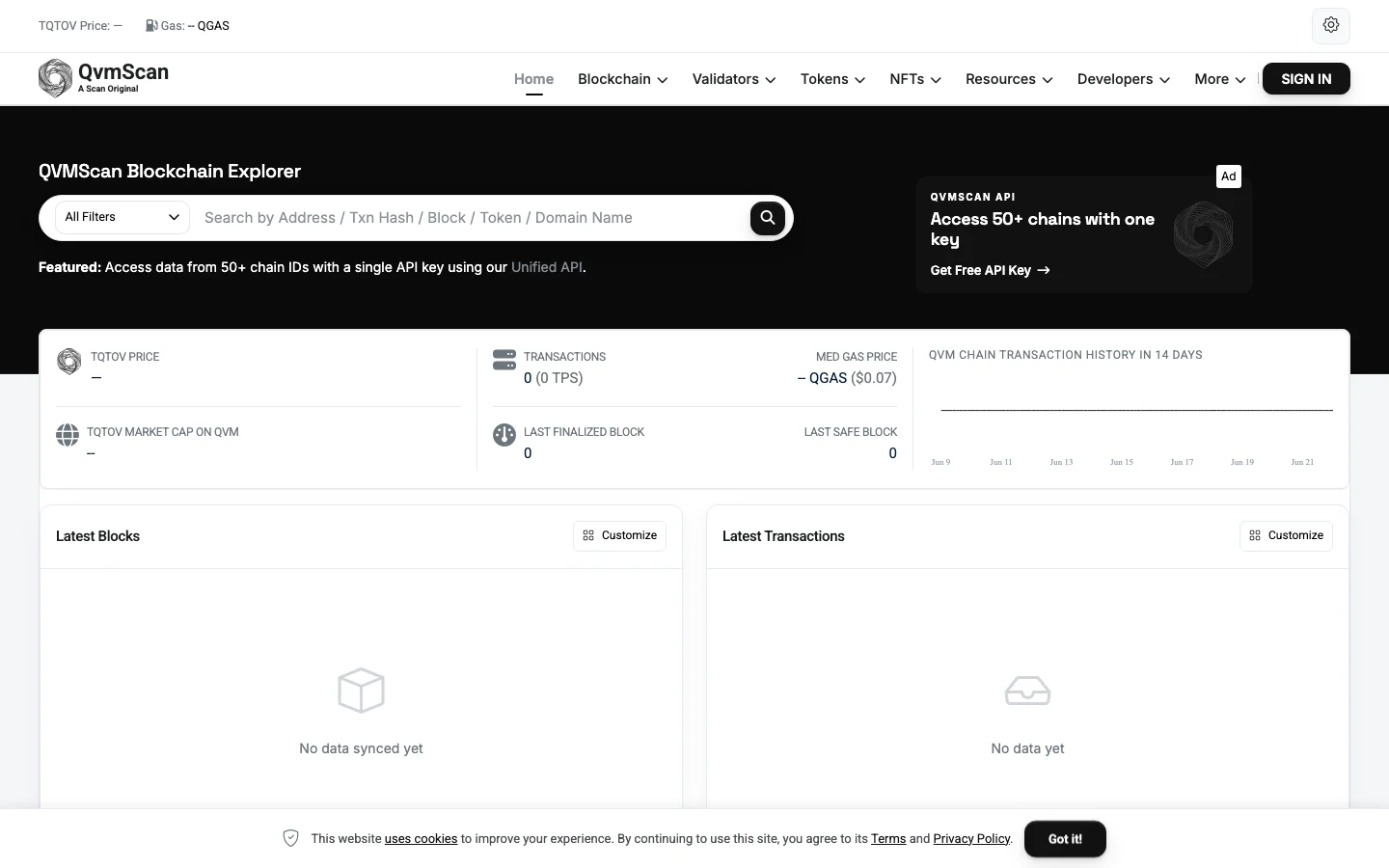
Qvmscan Explorer
The network explorer for the post quantum QVM. Blocks, accounts and transactions, with the signature scheme behind every action.
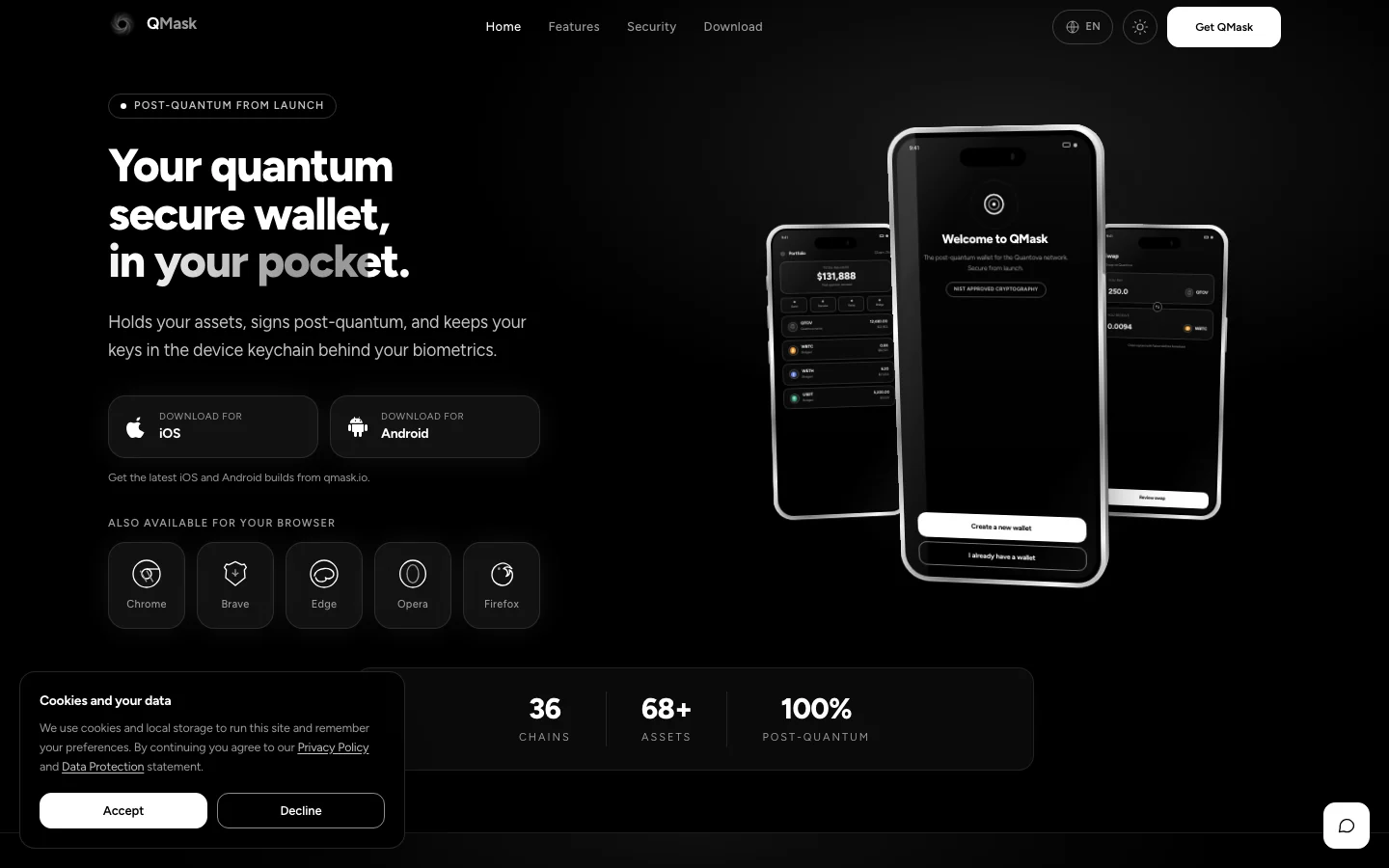
QMask Wallet
The native Quantova wallet. Signs on the device with Falcon, Dilithium and SPHINCS+. Quantum secure from first principles.
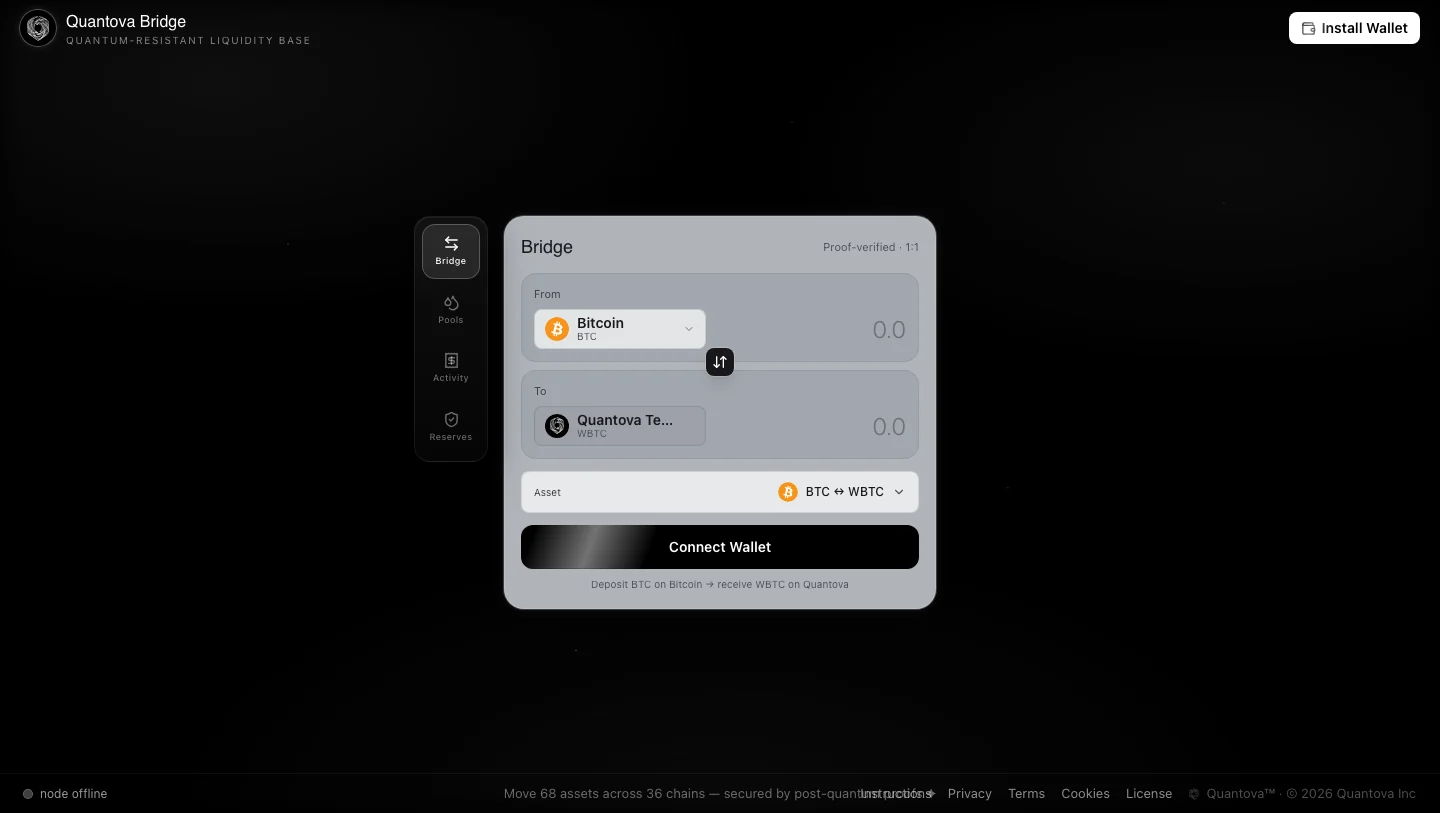
Qbridge
Wrap and unwrap value across 36 blockchains into the post quantum QVM, with outbound transfers proven by zero knowledge.
Conferences, meetups and technical assemblies
Join Quantova in person and online.
From the Quantova blog
Research notes, network updates and technical briefings.
What NIST’s post quantum standards mean for blockchain protocols
In 2024, the U.S. National Institute of Standards…

Intellectual property and trademarking in modern web3: Why strong IP …
Intellectual property (IP) protection is becoming…
Domain separation in post quantum execution environments
Post quantum cryptography introduces new primitive…
Follow Quantova
Official channels, community and the media kit.


Build on post quantum infrastructure
Adopt the SDKs, integrate the tooling, or talk to our institutional team about issuing assets on Quantova.
Owned by Quantova Inc. Released under the Business Source License 1.1. View licenses